Cathy Munday – A Trailblazer in Women’s Woodchopping

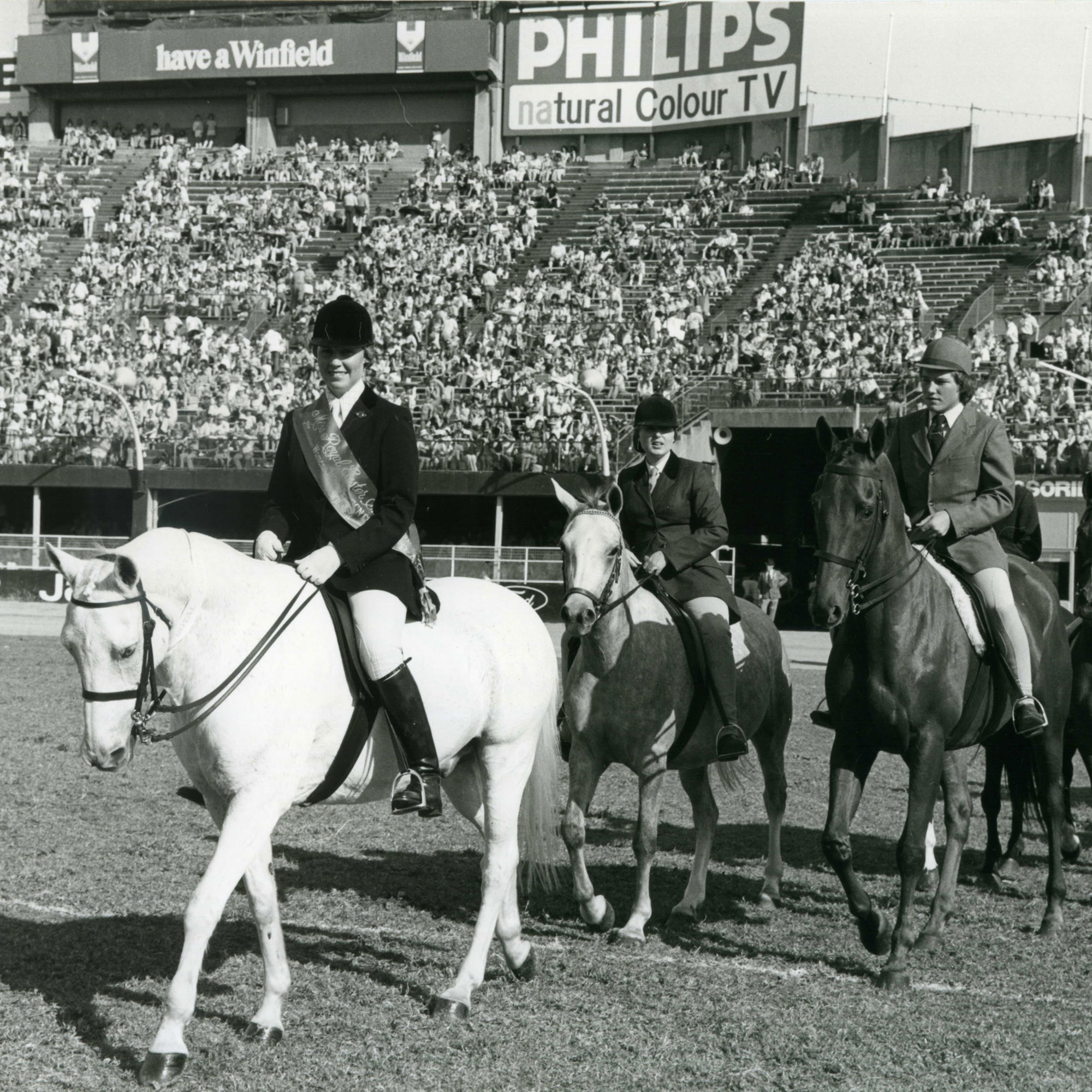
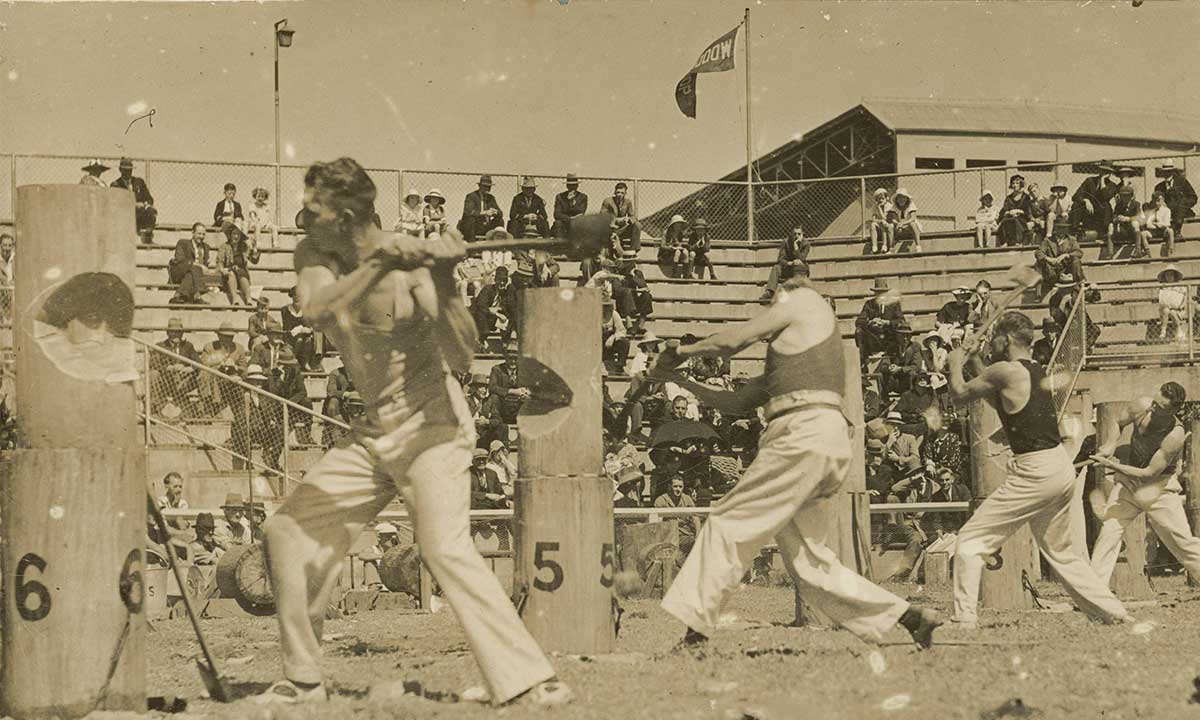
When sixteen year old Cathy Munday first entered the woodchop at a Royal Show in 1984, the sport “didn’t want to know about her”. Four decades later, at the 125th anniversary of the Sydney Royal Easter Show woodchop competition, she was welcomed as a star and honoured on centre stage. Cathy attended to present the inaugural 325 mm Women’s World Sawing Championship trophy, receiving cheers and tears from women in the crowd who understood the long struggle for equality in the sport. Her journey mirrors broader shifts in women’s sport, from exclusion and novelty status to genuine recognition, equal prizemoney and world titles.

Early Days – Growing Up in the Bush and Chopping with the Boys

Cathy’s woodchopping story began in the forests around Eden, where her father Bob held a logging contract and spent weekends repairing machinery while his children chopped at practice logs he set up for them. At country shows, where Bob competed in woodchop events like his father before him, Cathy joined in rather than sit bored on the sidelines. As the only girl, she competed against boys in junior chopping, holding her own until their growth spurts gave them a strength advantage. She then turned her focus to sawing, where technique and timing could offset pure power, giving her a fairer shot.
Two young girls smiling while holding colourful ice creams in front of a game stall at the Sydney Royal Easter Show.

Breaking Barriers at the Melbourne Royal and Other Major Shows

In 1984, Cathy entered the Melbourne Royal double handed sawing event with her father – a competition traditionally reserved for two men. Her entry was initially accepted, then refused when she arrived, prompting her mother to threaten legal action on fairness grounds. Officials relented, and although Cathy was nervous under intense media scrutiny, she performed well and proved she belonged in top level competition. Melbourne opened the door to other Royals, though acceptance was slow and she often felt merely tolerated while constantly asked to justify her participation in interviews.

Proving Herself – Wins, Jack and Jill Events and Media Attention

Cathy’s results soon spoke louder than any interview. She notched up major wins in double handed sawing with legends like David Foster and Steven Kirk, beating all male teams at Sydney, Canberra and Melbourne despite heavy handicaps. As Jack and Jill events became more common, Cathy quickly became the partner of choice, anchoring many championship victories. Her success made it impossible to dismiss women as novelties in the arena and showed that mixed gender teams could be among the strongest on the program. Yet even as a proven champion, she still had to fight administrators for more women’s classes and equitable treatment.

Fighting for Women’s Events and Equal Opportunities

When Cathy began pushing for additional women only events, organisers argued they would look silly or detract from the sport’s image. She countered that women racing women at the same level was no different from men racing men, just as in swimming or athletics. For years she met stubborn resistance, and by the time a back injury forced her to retire from competitive chopping in 1994, she still had not secured the program she envisioned. Nonetheless, she had planted the seeds of change and earned respect as both an athlete and an advocate.


The 2003 Breakthrough – Women’s Underhand Chop at the Sydney Show

In 2003, news that a women’s underhand chop would be held at the Sydney Royal Easter Show galvanised Cathy at a difficult time. Her brother had recently been killed in a logging accident, and the family never recovered his axe from the site. Determined, Cathy and her sister hired a metal detector and searched the bush until she imagined where he would have thrown the axe next; there, buried deep in bark, they found it. Cathy handed the restored axe to her father, promising to chop in Sydney – and she did, winning the event with a resolve that “no one was going to beat” her.

Building Women’s Teams and the Parent and Child Event

After that breakthrough, Cathy became increasingly focused on expanding women’s opportunities, arguing for women’s teams events at the Sydney Show. Organisers claimed there were not enough female competitors, but she insisted the numbers were already there if officials were willing to program them. A demonstration teams event against New Zealand women packed the stadium and proved her right, leading to ongoing women’s team contests with Cathy as Australian captain until her retirement in 2009. She also challenged the rules of a “father and son” event, lobbying successfully to open it up to any parent and child pair – enabling fathers to compete with daughters and culminating in a win for Cathy and her dad the following year.

World Championship Titles and Equal Prizemoney for Women

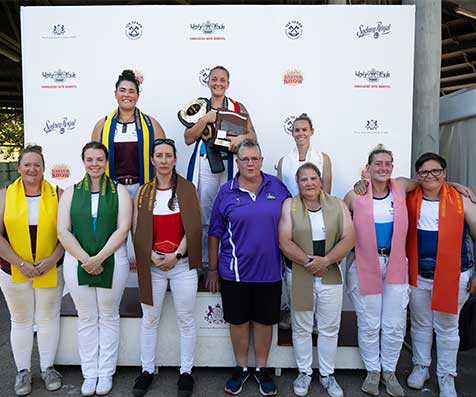
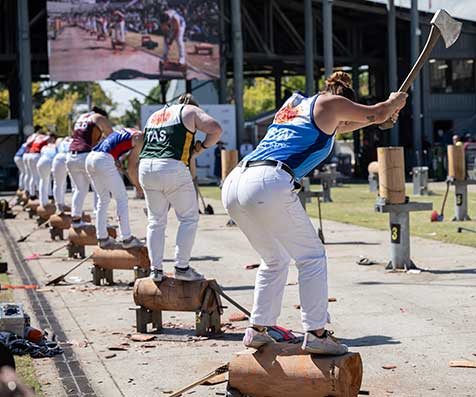
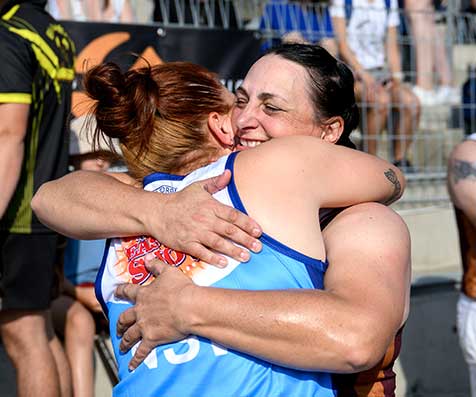
By 2024, Cathy’s long campaign bore historic fruit with the introduction of the 325 mm Women’s World Championship Sawing Contest (single handed) and the 275 mm Women’s World Championship Underhand at the Sydney Royal Easter Show. For the first time in Royal Agricultural Society of NSW history, individual women’s world championship events were on the woodchop program, with prizemoney equal to the men’s events. The inaugural titles went to Jinaya Niass of Riverstone, NSW (sawing) and Ashleigh Marsh of Bellbird, NSW (underhand), with Cathy presenting both awards in front of a deeply appreciative crowd. Many in the stands understood they were witnessing the moment the last barrier to parity in the woodchop arena was finally cut down.

Career Highlights and Hall of Fame Recognition

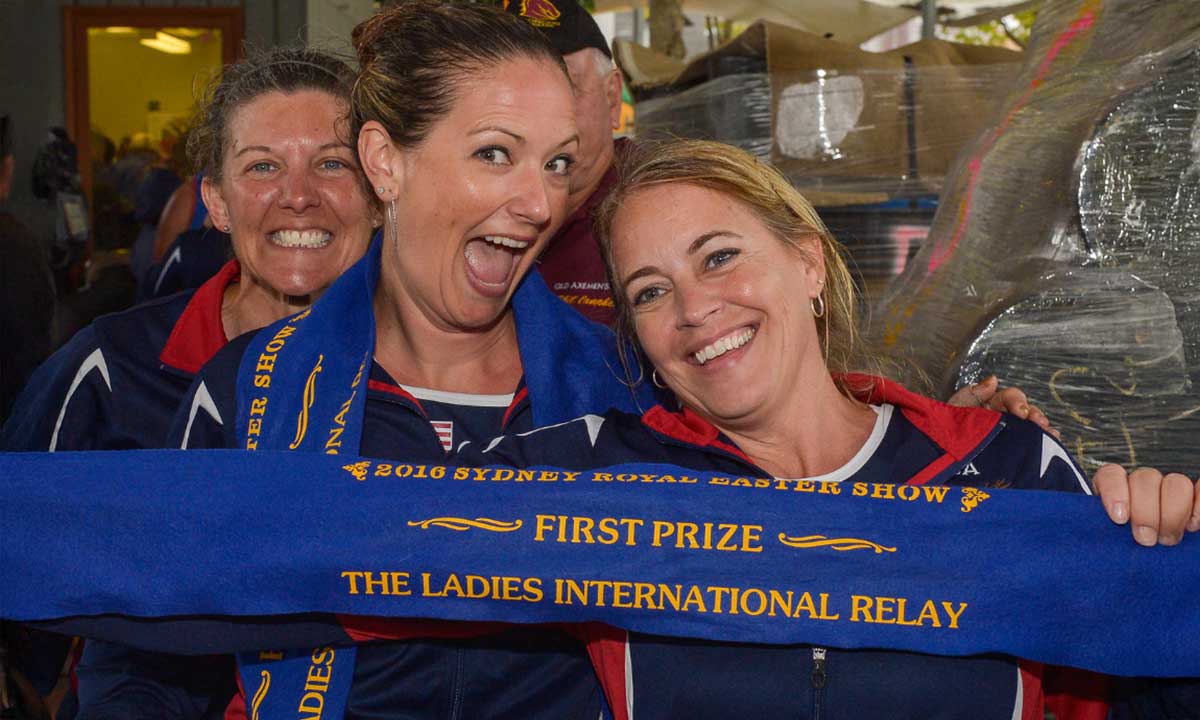
Although Cathy excelled as both an axewoman and a sawyer, her proudest memories come from national teams events where she raced for Australia rather than herself. In a famous relay at the Sydney woodchop stadium, she chased down New Zealand star Karmyn Wynyard after turning behind, inspired by the roar of the crowd and David Foster’s sideline call to “find something now”, ultimately winning by a single blow. She jokes that if it had been just her own individual women’s championship, she might still be chopping, but racing for her teammates sparked another level of determination. In 2016, the sport formally recognised her impact by inducting her into the Australian Axeman’s Hall of Fame as both a champion competitor and a trailblazer for women.

Cathy Munday’s Lasting Legacy in Women’s Woodchopping

Today, Cathy can look at a full program of women’s, mixed and family classes and say, with a laugh, that all the events are finally “sorted out” so she no longer has to pester anyone. From being treated as an oddity at sixteen to seeing equal prizemoney and women’s world championships at the Sydney Royal Easter Show, her persistence has reshaped the sport. Crowds who applauded Jinaya Niass and Ashleigh Marsh in 2024 were also celebrating Cathy, whose courage, competitive fire and advocacy helped make those victories possible. Her story stands as a powerful example of how one determined competitor can change a tradition as tough and time honoured as woodchopping.

Two young girls smiling while holding colourful ice creams in front of a game stall at the Sydney Royal Easter Show.


Words by Vicky Hastrich

RAS Heritage Collection

RAS Heritage Collection

The RAS Heritage Centre holds a unique collection that tells the story of the RAS and its associated activities.

Explore the online catalogue to search our archives, discover your own stories, and delve into the history of our premier event, the Sydney Royal Easter Show.

Buy Sydney Royal Easter Show tickets now

Buy Tickets